Ever think your money could work a bit harder for you? Nearly half of all U.S. stock investments go into index funds, so many people wonder if a steady, simpler plan beats the more active managed funds. In this post we take a closer look at both styles. We check out their fees, how predictable they are, and how they perform overall. We also talk about what works well and what might slip up in each option, so you can see which one could be the smarter choice for you.
Core Differences Between Index Funds and Actively Managed Funds

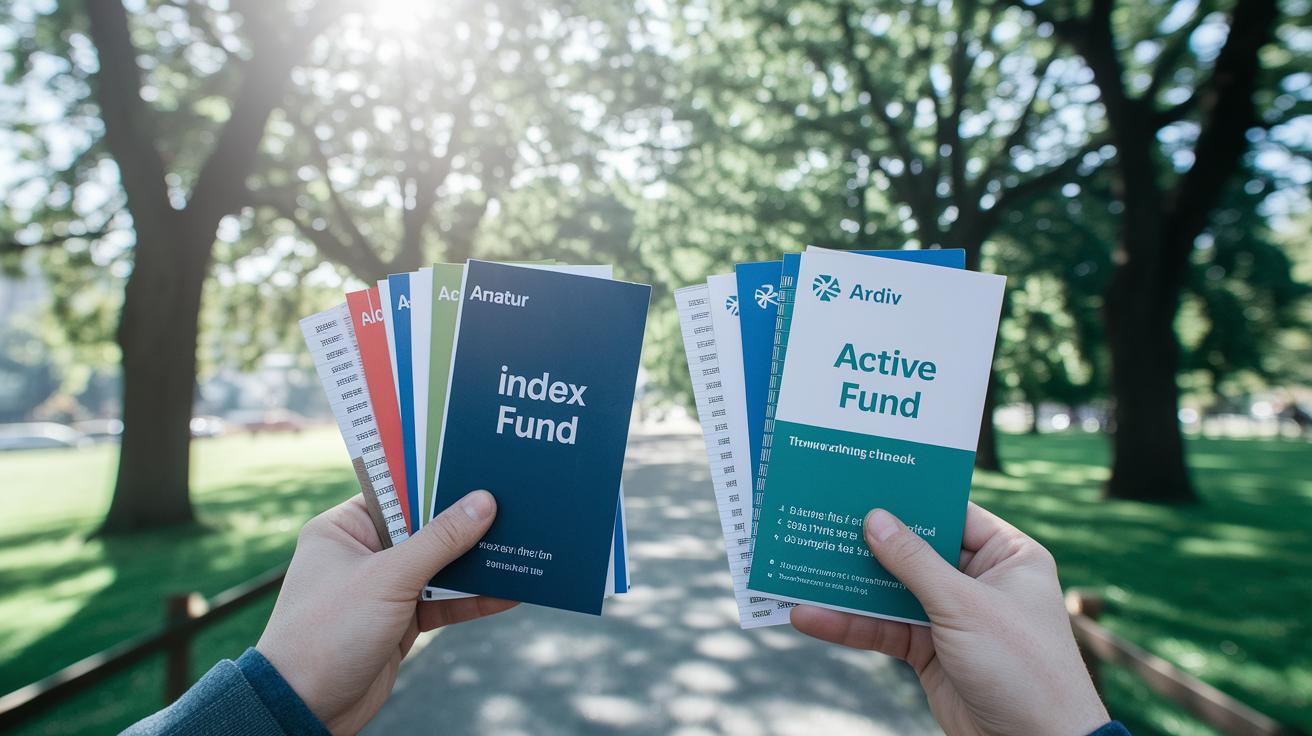
Index funds and actively managed funds are two different ways to invest your money. Index funds make up almost half of all U.S. stock investments. They follow a market index like the S&P 500 with very little trading. Actively managed funds, on the other hand, have managers who adjust the investments often to try beating the market. Over time, many people have turned to index funds, with over $470 billion moving into them as investors look to save on fees and get steady gains.
When you're choosing between these options, keep a few things in mind. Index funds aim to match the market’s performance without a lot of fuss, while actively managed funds try to earn higher returns by changing things around more frequently. This extra work means they can be less predictable and often come with higher fees that might cut into your profits.
Here are five key differences between them:
-
Management Style: Index funds follow a market index automatically with very little change. Actively managed funds have a manager who makes decisions about buying and selling.
-
Investment Goals: Index funds try to copy the market’s results. Active funds work to earn more than the market.
-
Cost: Index funds usually have low fees, around 0.03% to 0.20%. Active funds typically charge more, often between 0.5% and 1.5%, because of the extra research and management.
-
Performance Consistency: Index funds tend to deliver steady results that mirror the market, while active funds can show more ups and downs depending on the manager’s decisions.
-
Risk: Index funds lower the risk tied to a manager’s choices since they stick to an index. Active funds take on extra risk with the hope of earning higher returns.
Comparing Fee Structures and Expense Ratios in Index vs Actively Managed Funds

When you look at fund costs, index funds usually ask for fees between 0.03% and 0.20%. That means more of your money gets to work harder and longer. Actively managed funds, on the other hand, tend to charge about 0.5% to 1.5% to help cover things like manager salaries, bonuses, research, and even office expenses.
Below is a simple table that shows these fee ranges:
| Fund Type | Average Expense Ratio |
|---|---|
| Index Funds | 0.03% – 0.20% |
| Actively Managed Funds | 0.5% – 1.5% |
Lower fees in index funds mean every dollar you invest has a better chance to grow over time. Imagine switching to an index fund where those small fees let each dollar stick around longer and build up over the years. It’s amazing how these little savings can really boost returns bit by bit.
Long-Term Performance Trends in Index Funds vs Active Strategies

Looking at the long run, index funds usually stick close to the market's steady gains. Over the past ten years, the S&P 500 has delivered about 13% annual returns before fees. Since index funds mimic the S&P with only tiny fees, say around 0.1%, you end up with nearly the same growth.
When you check out these trends over different market cycles, it's clear that low fees help keep more money growing. Studies show that actively managed funds, which try to beat the market, often fall short because their higher costs eat into your gains. Imagine putting your money in a fund that charges 1.2%, even if the manager works hard, those extra expenses can add up quickly and lower what you really get.
So, many investors now choose to keep it simple with index funds. They find that it’s tough to beat the market after fees, and sticking with a basic approach often means letting your money grow along with the entire market.
Risk Profiles and Volatility: Active Management vs Index-Tracking

Active funds can swing a lot because managers make lots of decisions that really change how the fund performs. On choppy market days, an active fund might react fast, sometimes in a good way and sometimes not so great. Imagine a fund manager seeing tech stocks drop suddenly and quickly cutting the fund's value. This means your returns can jump around a lot, making it hard to know what to expect every day. In short, active strategies bring risks that come straight from those management choices.
Index funds, on the other hand, stick closely to a set benchmark, so they usually behave in a steadier, more predictable way. They don't rely on a manager's gut feeling to make lots of trades, and their ups and downs tend to match the overall market. Picture an index fund like a faithful shadow that follows the market's every move without any surprises. Even though they still have some risk because of the market, they keep away the extra ups and downs that come from human decisions, giving many investors a sense of calm.
Tax Efficiency and Turnover: Why Index Funds Often Outpace Active Funds
Index funds usually don’t trade a lot, keeping their turnover under 10 percent. In contrast, active funds often trade more than 60 percent of their holdings every year. When a fund trades too often, it creates taxable capital gains, and that means more tax bills for you. Imagine a fund manager constantly reshuffling the portfolio – each trade might create a tax hit that slowly eats away at your returns.
ETFs, which are a popular type of index fund, often handle redemptions through a method called in-kind redemptions (a process that helps avoid triggering extra taxes). This method helps keep more of your money working for you instead of going off to cover taxes.
This lower turnover not only cuts down on tax bills but also makes the growth of your investment smoother and more predictable. Think of it like walking at a steady pace instead of sprinting – gradual moves mean fewer unexpected tax surprises. With fewer taxable events, your money can compound more effectively over time. Picture two investors: one sticks with a low-turnover index fund and steadily grows wealth, while the other, dealing with constant trading in an active fund, sees less growth because extra taxes cut into their returns.
Investment Philosophy: Market Efficiency vs Manager Expertise

When you look at how these funds work, you really see two different ideas. One idea is that markets work efficiently. This means that every bit of public information is already part of a stock's price, so stocks tend to be priced fairly. Passive funds follow this idea by just copying the overall market (we call that beta) with indexes like the S&P 500. Imagine you're following a map that shows the busiest road – it's clear and predictable. The thought is that trying to outguess the market often doesn't give extra rewards, especially when you factor in extra costs. Think of it like riding a steady train that follows a set track without surprises.
Active management is a whole other story. Here, the aim is to earn returns that go beyond the usual market gains, known as alpha. Managers pick individual stocks and try to time the market based on careful research and a little gut feeling. They work hard to beat the market, but the fees and costs from frequent trading can eat into those gains. Picture an active manager like a chef who adds a special ingredient hoping to make a signature dish, though sometimes the extra spices just cost more than they add in flavor. This makes keeping true alpha a tough and ongoing challenge.
Selecting Your Strategy: Matching Goals to Index or Active Funds

When you're deciding between index and active funds, think about your own goals, how long you plan to invest, and how sensitive you are to costs. You might like a safe, steady way to grow your money over time with low fees or a more lively strategy that zooms in on certain parts of the market. It all depends on how much risk you can handle, the length of your investment journey, and if you’re okay with paying a bit more for a chance at higher returns. Picture it like planning a road trip: you choose between a well-known highway or a scenic, but unpredictable, back road.
Different investors often lean one way or the other. If you’re planning for the long run and want to watch your money grow without lots of extra fees, index funds might be right for you. On the other hand, if you’re excited about making tactical moves and diving into specific market areas, active funds could be your pick. Some investors appreciate a steady ride with index funds, while others enjoy the thrill of active strategies even if it means riding out some ups and downs.
When you’re ready to put your plan in place, write down what’s most important to you. List your investment goals, the fee costs you’re comfortable with, and your risk limit. Then, decide which strategy fits best. Think of it like putting together a toolbox: each tool is picked with care so that your portfolio is ready for whatever the future brings.
The Shift Toward Passive Investing and Future Outlook

Passive equity choices have really taken off, with over $470 billion pouring into them in recent years. Today, index funds now own 45 percent of U.S. stock-market assets, showing a clear lean toward an easy, hands-off way to invest. It’s like choosing a smooth, paved road over bumpy backroads that can lead you astray. Many investors appreciate that a passively managed portfolio gives steady market exposure, and it even makes sense when you compare it to the uncertainty of unpredictable detours. In many cases, the traditional active management approach is giving way to options that mix a bit of both worlds.
But active managers aren’t just sitting by. They are busy coming up with fresh ideas such as smart-beta funds, active ETFs, and niche funds that blend styles. Think of it like adding a bit of spice to a familiar recipe to give it a new kick. These hybrid funds might be the compromise many investors are looking for, offering a mix of stability and tactical moves. Experts believe that over the next ten years, we can expect even more choices that balance steady exposure with the chance to take advantage of market shifts.
Final Words
In the action, we looked at key differences in fee structures, risk, and performance trends. The post broke down how cost, tax impact, and fund philosophy play a big role in making smart finance moves.
We also compared how market trends meet budget-friendly shopping tips and credit management strategies. By weighing these points, including index funds vs actively managed funds, readers gain a solid view of each fund type. Every step you take adds up. Keep your eyes on the future and make decisions that support your financial growth.
FAQ
How do index funds compare to actively managed funds across discussions on reddit, Vanguard, and Fidelity?
The comparisons show that index funds track a market benchmark with very low fees, while actively managed funds try to outperform the benchmark through frequent trades and expert decisions, often at a higher cost.
What are the performance differences between actively managed funds and index funds?
The performance differences indicate that index funds typically provide benchmark-matching returns with minimal fees, whereas actively managed funds often struggle to beat the benchmark due to higher costs and variable manager decisions.
How do mutual funds, index funds, and ETFs differ from each other?
The differences highlight that mutual funds can be either active or passive, index funds strictly track a benchmark at low cost, and ETFs trade like stocks, offering a mix of flexibility with typically lower fees.
How do actively managed funds generate returns?
The actively managed funds generate returns by relying on portfolio managers to select stocks and manage trades in hopes of beating benchmark returns, despite facing higher fees and potential fluctuations.
Why does Warren Buffett prefer index funds?
The preference by Warren Buffett is rooted in the fact that index funds have low fees and simple, reliable strategies, which over time tend to yield better long-term outcomes compared to many active funds.
Why might investors avoid actively managed funds?
The avoidance is due to actively managed funds charging higher fees and showing inconsistent performance, making them less appealing compared to the steady, low-cost returns of index funds.
What are some examples of actively managed funds?
The examples of actively managed funds include many mutual funds where expert managers choose the investments, although specifics vary and investors should review individual fund details for current information.

