Have you ever thought about which credit card can help you save money without any hassle? It’s a bit like picking between two everyday tools, with each one offering its own special perk.
One card gives you a neat 2% cash back on every purchase. The other cranks up your rewards when you dine out or buy everyday items.
In this post, I lay out the key features side by side. That way, you can choose the card that fits your spending habits and keeps more cash in your wallet.
Side-by-Side Citi vs Chase Credit Card Comparison Overview
Both Citi Double Cash and Chase Freedom Unlimited are simple and friendly cards that cost nothing each year. With the Citi card, you earn 2% cash back on every purchase, 1% when you buy and another 1% when you pay off your bill. Chase, on the other hand, gives you 1.5% cash back all the time, with a lovely little boost to 3% when you dine out or shop at drugstores. Have you ever enjoyed a little extra cash back on your favorite meal or at the store? It really can add up on busy days.
They also come with attractive welcome bonuses and neat balance-transfer offers. For instance, Citi hands out 20,000 ThankYou points (about $200 in cash back) when you spend $1,500 within six months. Chase makes it a bit easier to kick things off by requiring just $500 in spending during the first three months for a bonus of similar value. Plus, both cards offer a 0% APR on balance transfers. Citi gives you 18 months of this deal, while Chase offers 15 months. After that, balance transfers come with a variable rate, roughly between 18.24% and 29.99%.
Next, here is a quick look at the main features:
| Feature | Citi Double Cash | Chase Freedom Unlimited |
|---|---|---|
| Annual Fee | $0 | $0 |
| Cash Back Rates | 2% total (1% on purchase, 1% on payment) | 1.5% baseline; 3% for dining and drugstores |
| Welcome Bonus | 20,000 points after $1,500 in 6 months | Bonus with $500 spending in 3 months |
| 0% APR on Balance Transfers | 18 months | 15 months |
| Post-Promotion APR | 18.24% to 29.99% | 18.24% to 29.99% |
In truth, each card has its strengths. The Citi card is neat if you want a smooth 2% cash back on every purchase and payment, while the Chase card is a treat for those who love dining out or shopping at drugstores. Both offer appealing bonuses and competitive balance-transfer features, making it easier to pick one that fits your spending habits. Enjoy comparing, and happy spending!
Citi vs Chase Credit Card Rewards Program Breakdown

Both cards offer rewards in different ways. With the Citi Double Cash card, you get 2% cash back on every purchase, half when you buy and half when you pay your bill. If you like knowing exactly what you're earning every time you shop, this card works great. Imagine picking up your weekly groceries and instantly getting that extra 2% to help with your budget.
Chase Freedom Unlimited has its own twist. It offers a base rate of 1.5% cash back on most purchases, but if you dine out or hit up a drugstore, you earn 3%. This can be a great pick if eating out or buying everyday essentials is your thing. Picture enjoying a meal with friends while knowing your extra cash back might cover part of that bill.
Both programs also include smart transfer partnerships. For example, Citi teams up with partners like Turkish Airlines and Virgin, while Chase Ultimate Rewards connects with United, Hyatt, and Southwest. Plus, you can combine your points from some cards (like Sapphire and Ink) to get even more value when you redeem them.
If you'd like a closer look, check out this credit card rewards comparison. It really helps you match a rewards system to your spending habits so you can save in a smart and simple way.
Annual Fees and APR: Citi vs Chase Credit Card Cost Comparison
Both the Citi Double Cash card and the Chase Freedom Unlimited card have no yearly fee. They keep it simple, so you don't pay extra just for holding the card.
| Attribute | Citi Double Cash | Chase Freedom Unlimited |
|---|---|---|
| 0% APR Duration | 18 months on balance transfers | 15 months on purchases and transfers |
| Balance Transfer Fee | 3% | 3% |
| Post-Promotion APR | 18.24% – 29.24% | 19.24% – 29.99% |
Imagine moving a balance and getting extra time to pay it off without extra interest. With Citi, you've got 18 months to take care of your balance transfers, giving you a bit more breathing room.
Both cards come with travel benefits too. They waive the fee for transactions made internationally, which might be a big plus if you shop or travel abroad a lot.
- If you need a longer interest-free period for transferring balances, Citi might be the better choice.
- However, if you want flexibility with both daily purchases and balance transfers, Chase offers a neat option.
Hope this helps you decide the best choice for your spending habits!
Citi vs Chase Credit Card Comparison: Savvy Savings
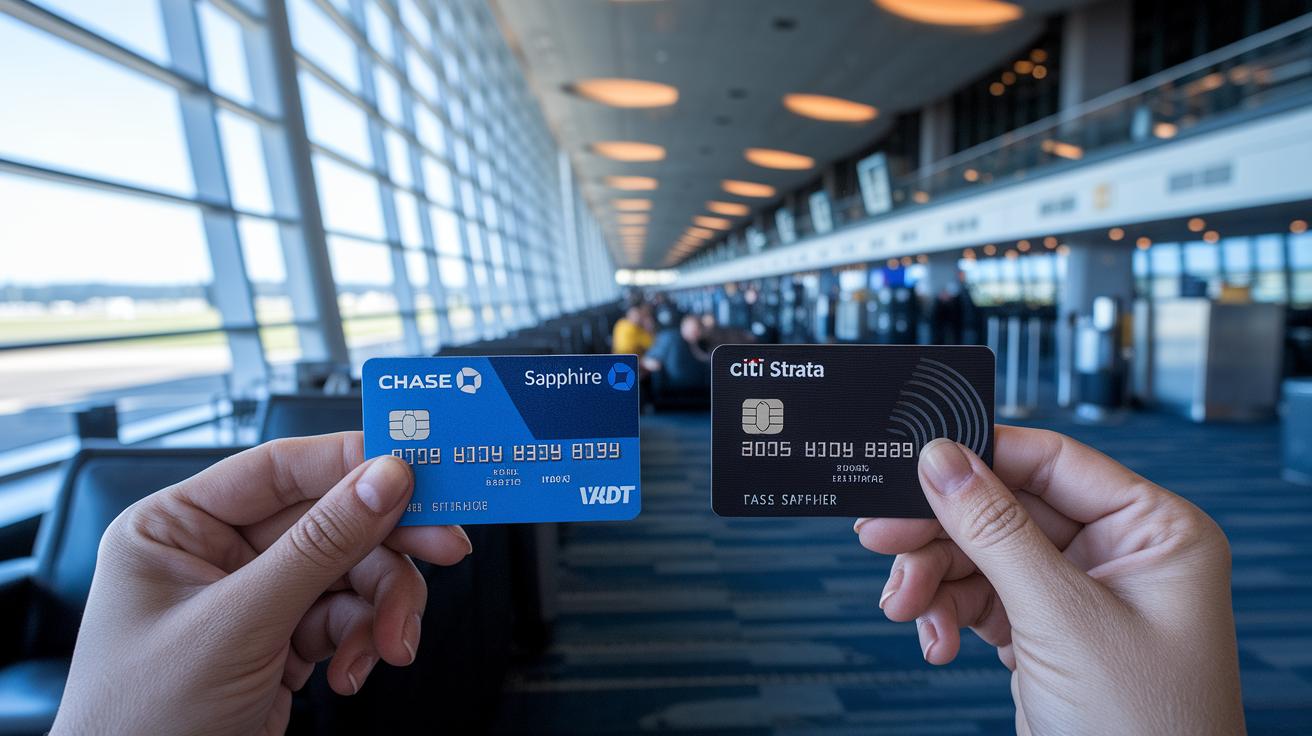
When it comes to travel rewards, both Citi and Chase have cool deals for people who travel a lot. Chase’s travel cards are great for those who love dining and trips. For example, the Sapphire Preferred card has a $95 fee and gives you 2X points on travel and dining. Plus, you earn 60,000 bonus points after spending $4,000. Imagine racking up extra points on a cozy dinner or a relaxing hotel stay. I recall hearing about Jessica who, after a tasty meal at a neighborhood bistro, saw her points pile up enough to fund her next quick weekend trip.
If you’re after something a bit fancier, the Sapphire Reserve might be up your alley. With a $550 fee, this card earns you 3X points on travel and dining. It also opens the door to Priority Pass lounges (a cozy space at airports) and hands out a $300 annual travel credit to help cover extra expenses. It’s a solid option if you love traveling in style.
Citi isn’t letting Chase have all the fun. Their Strata Premier card, also with a $95 fee, gives you 3X points on air travel and 2X points on hotels and restaurants. It even offers a bonus of 60,000 points after spending $4,000. Extra perks like waived foreign transaction fees and trip cancellation or interruption coverage make international travel feel a bit smoother.
| Card | Fee | Earning Rate | Key Perks |
|---|---|---|---|
| Sapphire Preferred | $95 | 2X on travel and dining | 60,000 bonus points |
| Sapphire Reserve | $550 | 3X on travel and dining | Priority Pass access and $300 travel credit |
| Strata Premier | $95 | 3X on air travel; 2X on hotels/restaurants | Waived fees and trip cancellation/interruption coverage |
For serious travelers, matching these cards with your spending habits can mean smart savings on premium adventures. Think of it as setting the stage for more easy-going journeys whenever you’re ready to hit the road.
Citi vs Chase Credit Card Additional Benefits and Security Features
Chase gives you solid purchase protection, with up to $500 covered per claim over 120 days. Meanwhile, Citi goes a step further by offering coverage of up to $10,000 per claim. Imagine buying a fancy new gadget and knowing you have this kind of safety net, it really puts your mind at ease.
Both cards come with zero fraud liability. In simple terms, if someone else uses your card without permission, you won't be held responsible. This means you can shop without worrying about unexpected charges.
Besides that, both banks extend your manufacturer’s warranty by an extra year, so your big-ticket items get even more care beyond the standard deal.
The Chase app is super handy. It sends real-time alerts and lets you make contactless payments, so you’re always in the loop. On the flip side, the Citi app features a built-in spending tracker, smart transaction controls, and a tokenized wallet (a secure way to manage your digital payments).
- Real-time alerts for quick updates (Chase)
- Spending tracker and tokenized wallet features (Citi)
These features are designed to help you keep your money and transactions safe while you’re on the go.
Citi vs Chase Customer Service, Eligibility, and User Satisfaction Insights

Chase wins by a hair when it comes to customer service. They score a 3.9 out of 5, just a bit higher than Citi's 3.8. Both banks offer help all day and all night. They also have secure in-app messaging that makes it easy to ask questions or get assistance. Most issues get sorted out in about 30 days.
When checking who can sign up, the Citi Double Cash card usually looks for a FICO score of 690 or higher. On the other hand, the Chase Freedom Unlimited card is open to people with a score of 650 and above. This small gap can really count if you're trying to carefully build your credit.
The apps add even more to the user experience. The Chase app shines with a 4.7-star rating on iOS and is known for its friendly look and quick updates. Meanwhile, the Citi app, rated 4.5 stars, comes with a useful spending tracker and clear transaction controls.
- 24/7 support for both cards
- Secure in-app messaging systems
These details show that both banks are committed to offering great service while keeping eligibility clear and their apps easy to use.
How to Choose: Citi vs Chase Credit Card Recommendation Guide
If you like simple rewards for everyday purchases, the Citi Double Cash card is a solid pick. Every time you buy something, you get 2% cash back. Imagine paying for your groceries or a cup of coffee and instantly boosting your budget. It’s a steady perk that feels good every time.
But what if you enjoy extra rewards on your dining or drugstore trips? The Chase Freedom Unlimited card might be more your style. With 3% back on meals and over-the-counter goodies, it can really add up if these are your go-to spots. Have you ever noticed how a little bonus back can make a regular coffee run feel special?
If you travel often, your choice might change depending on how much you fly. For those who take medium-level trips, the Sapphire Preferred offers balanced perks at a modest fee. On the flip side, if you’re all about luxury travel, the Sapphire Reserve brings top-notch benefits and travel credits to the table. And if you want rewards you can use for flights, hotel stays, or dining out, the Citi Strata Premier card provides flexible options that adapt to your needs.
For business spending, the Ink Business Preferred card stands out. It helps you earn extra rewards on work-related expenses, making it a smart tool if you run your own business or manage company costs.
- Citi Double Cash: Great for steady, flat-rate rewards.
- Chase Freedom Unlimited: Ideal if you spend a lot on dining and drugstore purchases.
- Sapphire Preferred and Reserve: Perfect for different travel needs.
- Ink Business Preferred: Awesome for boosting business spend rewards.
Final Words
In the action, this article broke down key details on rewards, fees, APRs, and travel perks. We matched up the benefits side-by-side, covering bonus offers, balance transfer options, and digital tools that help manage everyday spending. It also touched on security features and customer service ratings to give you a full picture. The citi vs chase credit card comparison brings clarity to choosing a card that fits a careful budget. Enjoy stepping into smarter financial choices with confidence.
FAQ
How do Citi and Chase credit cards compare based on Reddit discussions?
When comparing Citi and Chase credit cards, each brand has unique perks. Citi cards like the Double Cash offer a simple 2% cash back, while Chase cards such as Freedom Unlimited add bonus rewards on dining and drugstores.
What is the disadvantage of Citi credit cards?
The disadvantage of Citi cards may be fewer bonus reward categories. For instance, while Citi Double Cash gives a steady flat rate, Chase often boosts rewards for dining or drugstore purchases, which might benefit certain spenders.
Is the Citi Double Cash credit card better than the Chase Freedom Unlimited?
The Citi Double Cash credit card provides a flat 2% cash back on all purchases. In contrast, Chase Freedom Unlimited offers 1.5% base cash back plus extra rewards on select categories, so the choice depends on your spending patterns.
What is the 2/3/4 rule for credit cards?
The 2/3/4 rule is not a broadly recognized credit card guideline. It sometimes refers to strategies for managing balances and utilization, but details can vary, so it’s best to check your provider’s recommendations.
How do the Chase Sapphire Preferred® and Citi Custom Cash℠ cards compare?
Chase Sapphire Preferred focuses on travel rewards with bonus dining points, while Citi Custom Cash offers straightforward cash back. Your decision should depend on whether you value travel benefits or simple, flat-rate rewards.
What are the key differences in rewards programs between Citi and Chase cards?
Citi rewards lean on flat rates and flexible point transfers, whereas Chase rewards often include bonus categories and diverse travel partnerships. Consider your spending habits when choosing the program that fits you best.
How do annual fees and APRs compare between Citi and Chase credit cards?
Both companies offer no annual fee choices like Citi Double Cash and Chase Freedom Unlimited. However, APRs and balance-transfer terms differ, so reviewing each card’s fine print will help match your credit needs.
What additional benefits and security features do Citi and Chase credit cards offer?
Both issuers include benefits like purchase protection, extended warranties, and zero liability for fraud. Their mobile apps also provide spending tracking and secure alerts, adding everyday value.
How do customer service and eligibility differ between Citi and Chase?
In user satisfaction, Chase slightly edges Citi, with lower credit score requirements on some cards. Both offer 24/7 support and intuitive mobile apps, helping guide your choice based on personal credit history.
How should I choose between Citi and Chase credit cards?
Your choice depends on spending habits. Consider Citi’s Double Cash for simple rewards, Chase Freedom Unlimited for category bonuses, or other travel models to suit your specific needs and lifestyle.

